|
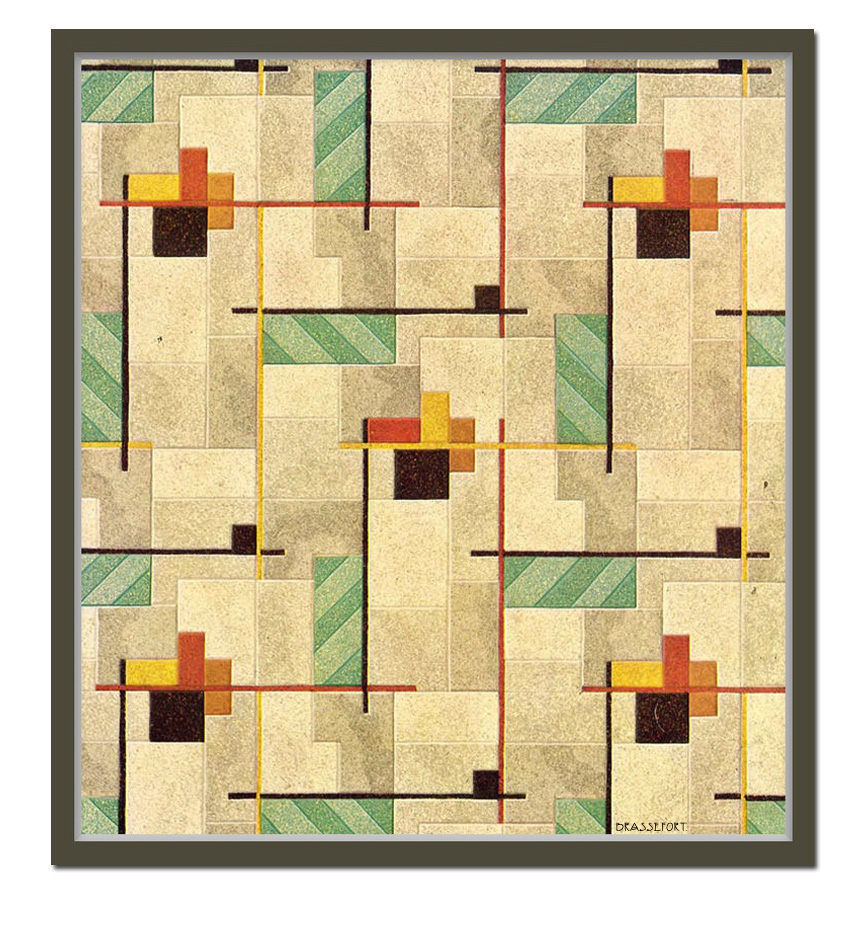
The critics' disappointment in "The Iconoclasts" was immediately dispelled by this work, which the New York Times described as "The most playful of his pieces yet, with a tantalizing hint of representationalism, albeit highly abstracted, in the shapes that suggest a chair and a customer." The beige of the background is widely interpreted as mild pollution, and the use of green for the barber poles suggests something organic arising from the relationships that form despite the stultification of industrial society. In a letter to a friend written in 1936, Brassefort confided that he actually titled the piece "the Berbers," refering to a tribe known for rug making, but kept quiet once the reviews started rolling in.
|
||
 |